Downtown Albuquerque has been in various stages of “revival” for as long as anyone can remember — but something feels different now. New restaurants keep opening, historic buildings are being converted to lofts, and a generation of young professionals and empty nesters are choosing downtown living intentionally, not by default. Here’s what life in the urban core of ABQ actually looks like in 2025.
Downtown Albuquerque Overview
Downtown Albuquerque occupies the blocks around Central Ave and the Alvarado Transportation Center, between the railroad tracks and roughly 8th Street to the west, extending north to Lomas Blvd and south to I-40. The adjacent East Downtown neighborhood — known as EDo — has become the lively arts and dining district that anchors the revival narrative.
Central Ave runs straight through the heart of downtown, connecting it west to Old Town and east through Nob Hill and toward the Sandia foothills. The Alvarado Transportation Center at Central and 1st is the hub of ABQ’s public transit network, with Rapid Ride buses and the Rail Runner commuter train to Santa Fe both accessible from downtown.
Downtown Housing Market
Downtown ABQ’s housing market is predominantly multi-family — historic loft conversions, purpose-built apartments, and a handful of condominiums. Single-family homes exist but are rare; the residential streets between downtown proper and EDo (particularly around Copper and Gold Avenues) have a small stock of older homes and infill new construction.
- Loft condos and downtown condominiums: $180,000–$400,000 — varies widely by building age and finish
- Apartment rentals: $1,000–$1,800/month for studios and 1BRs; $1,400–$2,200/month for 2BRs
- Older homes in EDo/adjacent streets: $250,000–$450,000 — craftsman and pueblo revival styles
- New infill townhomes: $350,000–$550,000 — modern builds near the arts district
The downtown condo market has seen increased activity as more amenities arrive. Resale values have been inconsistent historically — downtown ABQ has had long stretches of stagnation — but the recent momentum in new business openings and population growth is providing more support than the market has seen in years.
Schools Near Downtown ABQ
Downtown ABQ is not primarily a family neighborhood by current demographics, but schools exist. Lew Wallace Elementary serves the area at the K-5 level. Albuquerque High School — one of the city’s original high schools with a strong IB and arts program — is just east in the Nob Hill area.
The school zone is a common concern for families considering downtown. However, ABQ’s robust charter school and magnet program landscape gives downtown families significant choice beyond the zoned schools — many of which have competitive admissions drawing students from across the city.
Lifestyle: Downtown Albuquerque in 2025
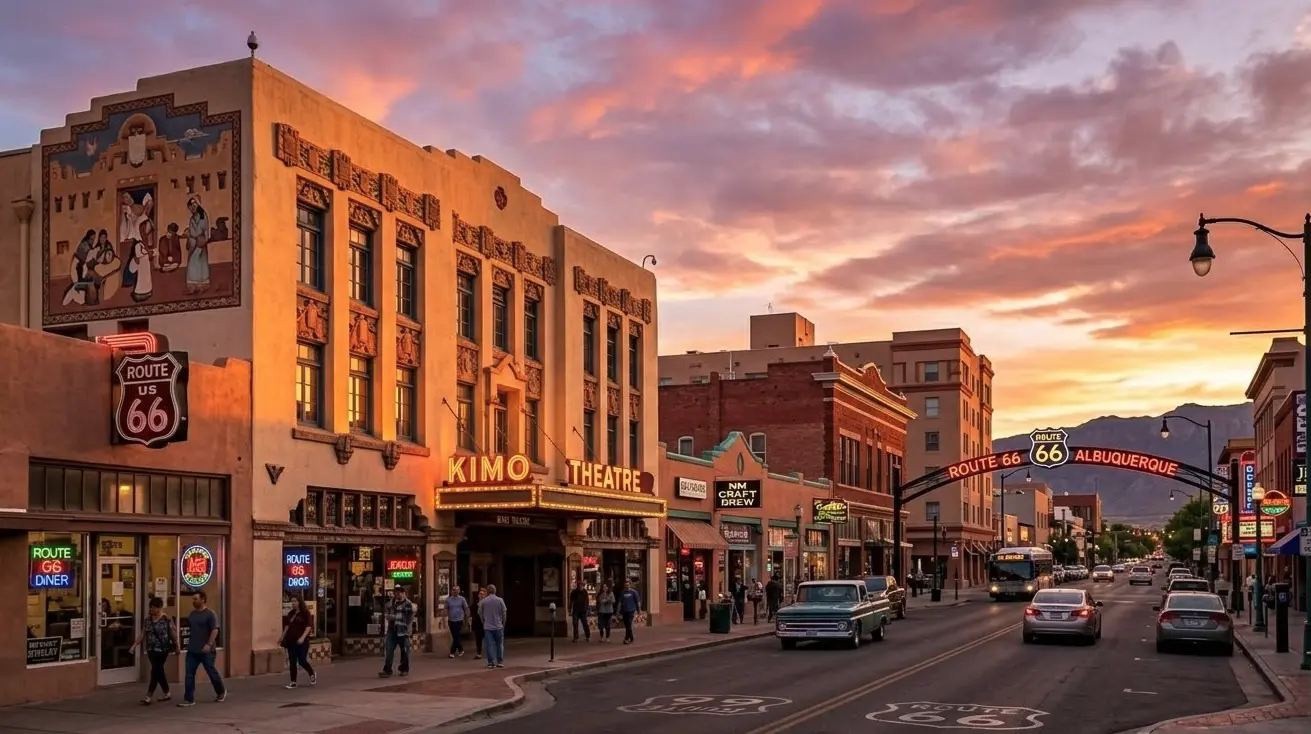
The lifestyle case for downtown has gotten materially stronger in recent years. EDo is now home to some of ABQ’s best restaurants — including Sawmill Market (a food hall concept that’s become a citywide destination), Frenchish, Effex, and a growing cocktail bar scene along Central and Gold Avenues. The KiMo Theatre on Central hosts live performances in a stunning 1927 Pueblo Deco building. The Albuquerque Museum hosts major exhibitions a short distance away.
The Sawmill District just north of downtown proper has added significant new energy — the Rail Yards Market (open on weekends seasonally) and Sawmill Market draw residents from across the city, giving downtown residents weekly community anchors they can walk to.
The Huning Highland and Huning Castle neighborhoods flank downtown to the south, offering slightly more residential character and some of ABQ’s best preserved Victorian and Craftsman architecture from the early 1900s. Many downtown residents consider these neighborhoods part of their extended community.
Public transit is genuinely usable from downtown in a way it isn’t elsewhere in ABQ. The ART Rapid Transit line on Central, Rapid Ride buses, and the Rail Runner to Santa Fe (an underused gem) all serve downtown residents. If you work downtown or in Santa Fe, you may actually be able to reduce car dependence significantly.
Pros & Cons of Downtown Albuquerque Living
- ✅ Best restaurant and arts scene — EDo and Sawmill put downtown at the center of ABQ culture
- ✅ Public transit access — the only part of ABQ with genuinely useful transit options
- ✅ Walkability — good by ABQ standards, especially in EDo
- ✅ Rail Runner access — commuting to Santa Fe by train is a real option
- ✅ Character and history — KiMo Theatre, Alvarado building, historic architecture
- ⚠️ Crime and homelessness — downtown ABQ has visible homelessness and higher property crime; improving but a real concern
- ⚠️ Parking — street parking and garage costs add up for car-dependent residents
- ⚠️ School zones — not a strength of this area for families
- ⚠️ Inconsistent resale history — downtown condos have had uneven appreciation
- ⚠️ Ongoing development uncertainty — the revival is real but downtown ABQ has disappointed before
Sherlock’s Verdict
Downtown Albuquerque is the right choice for urban optimists — people who want to be at the center of a city’s creative energy as it evolves. If you work downtown or in Santa Fe, value walkable dining and arts, and don’t need top school zones, the case is compelling. Go in eyes open about the challenges that still exist, but know that the trajectory is genuinely positive in a way it hasn’t been for a long time.
FAQ: Living in Downtown Albuquerque
Is downtown Albuquerque safe to live in? It depends on your block. EDo and the streets around Sawmill Market have improved significantly. Closer to the Central Ave bus corridor, visible homelessness is present. Research the specific address carefully; within downtown, safety varies block by block.
Can you commute to Santa Fe from downtown ABQ? Yes — the Rail Runner commuter train runs from the Alvarado Transportation Center to Santa Fe in about 1.5 hours. For a once-daily commute, many people find it genuinely workable, especially with a bike for the Santa Fe end of the trip.
What are downtown Albuquerque homes and condos for sale like? Mostly loft-style condos in converted historic buildings, purpose-built apartment-style condos, and occasional older homes in the adjacent neighborhoods. The Sherlock Homes NM team knows downtown and the surrounding neighborhoods well — reach out to explore your options.