
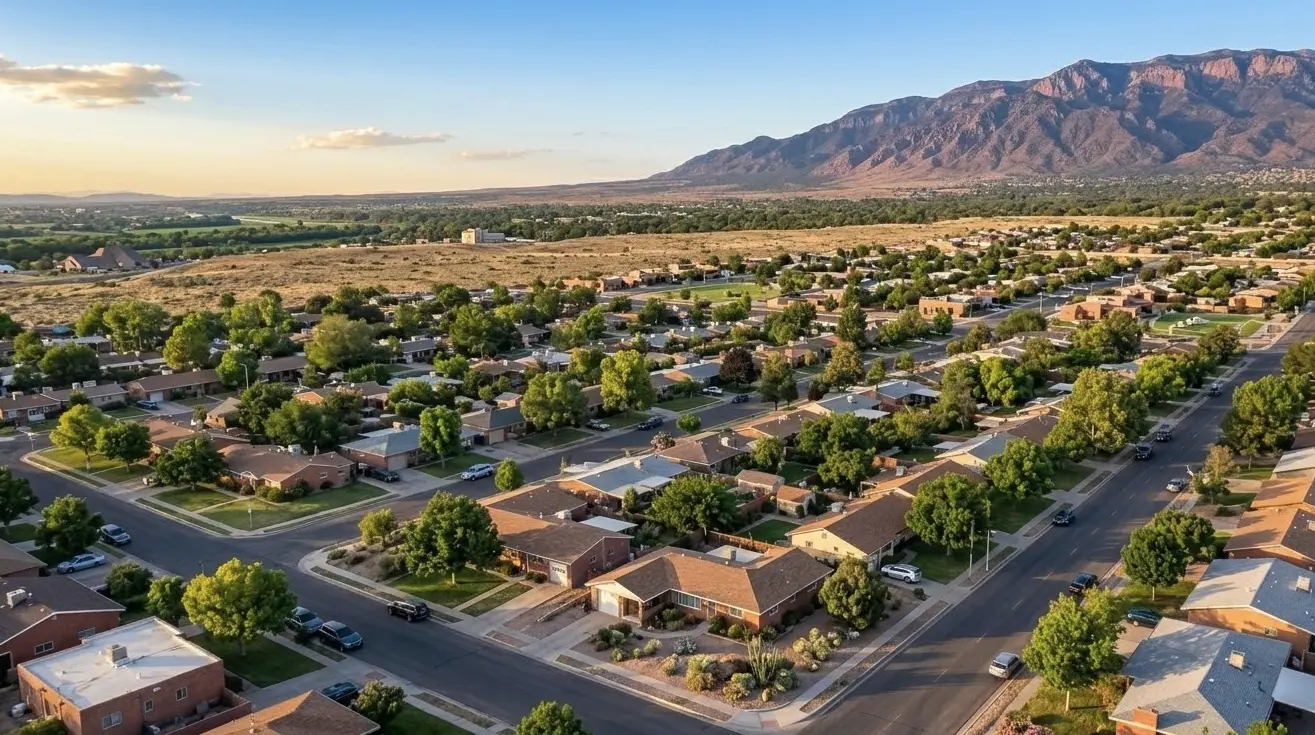
On a hot Albuquerque summer afternoon, when the city hits 95°F, East Mountain residents are sitting on their portales in the shade of piñon trees at a comfortable 80°F. That temperature difference — and everything that comes with elevation, ponderosa pines, and wide-open skies — explains why thousands of Albuquerqueans have traded the city for the mountains east of the Sandia range.
What Are the East Mountains?
The East Mountains is a loosely defined region encompassing the communities east of the Sandia and Manzano Mountains, connected to Albuquerque via I-40 through Tijeras Canyon. The main communities include Tijeras, Cedar Crest, Edgewood, Moriarty, and the communities along NM-14 (known locally as the Turquoise Trail) including Golden and Carnuel. Elevations range from 6,000 to over 7,500 feet, significantly higher than Albuquerque’s 5,300-foot average.
The landscape shifts dramatically from Albuquerque’s high desert to juniper-piñon woodlands and eventually ponderosa pine forest at the higher elevations around Cedar Crest and Tijeras. This is a distinctly different New Mexico experience — four genuine seasons, real winter snow, summer monsoon rains that turn the hillsides green, and fall colors that rival anything the state has to offer.
East Mountains Housing Market
The East Mountains offer a compelling value proposition: significantly more land for your money than anywhere in the ABQ metro, with the lifestyle benefit of mountain living. The tradeoff is commute time and the occasional winter road challenge on I-40 through Tijeras Canyon.
- Tijeras/Cedar Crest entry-level: $280,000–$400,000 (1–2 acres, older home)
- Cedar Crest mid-range: $400,000–$600,000 (2–5 acres, updated, views)
- Edgewood: $250,000–$450,000 (larger lots, more affordable than Tijeras)
- Premium mountain properties: $600,000–$1,500,000+ (10+ acres, custom, views)
- Rental market: Limited inventory; 3BR rentals run $1,400–$2,200/month
The East Mountains have seen significant buyer interest from remote workers who no longer need daily commutes. A buyer who works from home three days a week finds the math changes dramatically — two commutes a week on I-40 instead of five makes the mountain lifestyle genuinely viable. This shift has tightened inventory and pushed prices upward over the past several years, particularly in Cedar Crest and Tijeras.
Schools in the East Mountains
The East Mountains are served by Albuquerque Public Schools for the western communities (Tijeras, Four Hills adjacent areas) and Moriarty-Edgewood School District for communities further east. Mountain View Middle School and Manzano High School serve many East Mountain APS students. Moriarty-Edgewood schools have a strong community feel typical of rural New Mexico districts.
Some East Mountain families choose to enroll children in Albuquerque private or charter schools, accepting the commute for academic programs. This is a common topic in East Mountain parent groups — the community’s rural character is a strength, but school options are more limited than in the city.
Lifestyle in the East Mountains
Mountain living here means Cibola National Forest is your backyard. Hiking trails in the Sandia Mountains — including the Crest Trail and Four Hills-area trails — are accessible directly from East Mountain neighborhoods. The Sandia Peak Tramway’s base station is a short drive from Tijeras, and ski season at Sandia Peak Ski Area (on the mountain’s north side) puts skiing within 45 minutes of most East Mountain homes.
The Turquoise Trail (NM-14) runs north from Tijeras through Cedar Crest toward Santa Fe, passing through the historic mining town of Madrid — a thriving arts community with galleries, restaurants, and live music that draws visitors from across New Mexico. East Mountain residents have this as a weekend backyard destination. For daily needs, Cedar Crest has grocery stores and basic services; for major shopping, Albuquerque’s Eastside (accessible through the canyon) is 30–45 minutes away.
The Four Hills area sits at the Albuquerque-East Mountain transition zone along Central Avenue east of the Sandias — it offers some of the East Mountain character (views, elevation) with a shorter city commute, making it a popular compromise for buyers who want mountain proximity without the full canyon commute.
Pros & Cons of East Mountain Living
- Pro: Dramatically more land per dollar than ABQ proper
- Pro: Cooler temperatures and genuine four seasons
- Pro: Direct National Forest access for hiking, cycling, and equestrian use
- Pro: Genuine rural peace — dark skies, quiet nights, wildlife
- Pro: No city property taxes in most areas (unincorporated county)
- Con: I-40 Tijeras Canyon commute — can be slow during peak hours or weather events
- Con: Winter road closures or hazardous driving conditions in heavy snow years
- Con: Well and septic are common — higher maintenance responsibility
- Con: Limited local retail and dining; most errands require a drive to ABQ
- Con: Wildfire risk — some areas require defensible space and fire-resistant materials
Sherlock’s Verdict
The East Mountains are a lifestyle choice as much as a real estate decision. Buyers who thrive here are self-sufficient, outdoor-oriented, and value the quiet over the convenience. Remote workers, retirees, and outdoor enthusiasts consistently tell us the East Mountains are where they finally feel at home in New Mexico. If you’re commuting daily to ABQ, be honest with yourself about the drive before you commit — but if your schedule allows flexibility, the East Mountains may be the best value in the entire Albuquerque metro area. Contact Sherlock Homes NM to explore what’s currently available east of the mountains.
Frequently Asked Questions
How long is the commute from East Mountains to Albuquerque? From Cedar Crest, approximately 30–40 minutes to central Albuquerque in normal conditions. From Edgewood, plan 45–55 minutes. Weather and I-40 traffic can extend this significantly.
Do East Mountain homes have city water and sewer? Most properties outside of small commercial nodes use private wells and septic systems. Water quality and well depth vary — always get a well inspection and water test before purchasing.
Is wildfire a concern in the East Mountains? Some areas carry elevated wildfire risk, particularly at the forest interface. Check the county’s wildfire risk maps, ask about defensible space requirements, and get a quote on home insurance before making an offer — rates can be higher than in the city.