
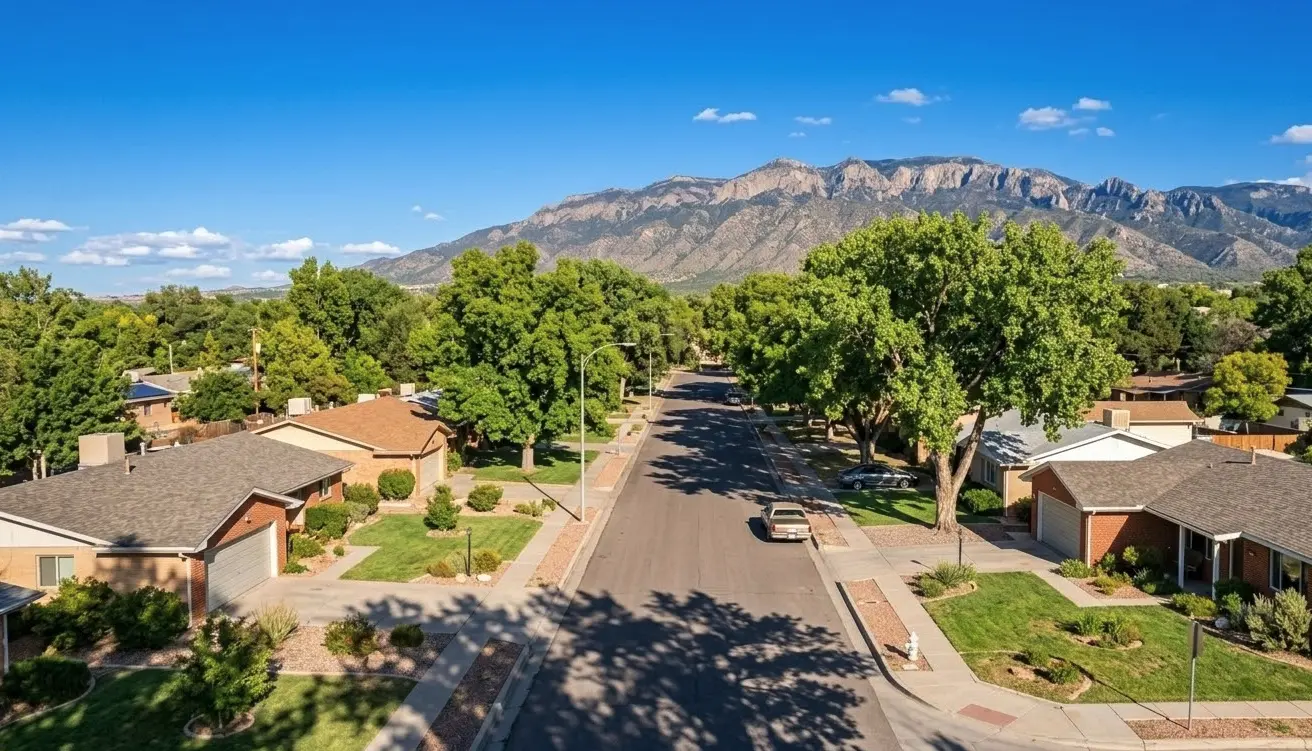
If you’re house-hunting in the Albuquerque metro and you have school-age kids, the APS vs. Rio Rancho Public Schools question will come up sooner or later. Both districts have loyal advocates, strong schools, and real weaknesses. This side-by-side comparison cuts through the noise so you can make the call that fits your family — not just the one that sounds best on a Facebook group.
Size and Scope
- APS: ~70,000 students, 140+ schools across Albuquerque. New Mexico’s largest district and one of the largest in the Mountain West.
- RRPS: ~18,000 students, roughly 25 schools serving Rio Rancho and portions of Sandoval County.
Size cuts both ways. APS offers far more specialized programs, magnet schools, and elective variety at the high school level. RRPS offers a more personal scale — smaller enrollment per school, easier parent access to administrators, and less bureaucratic friction when you need to resolve an issue.
Academic Performance
New Mexico’s public school system lags behind most states on national assessments, and both districts operate within that statewide context. That said, within New Mexico, both APS and RRPS have schools that perform at or above national averages.
APS top performers include La Cueva High School (consistently one of NM’s top-ranked high schools), Eldorado High School, and a cluster of high-achieving elementary schools in Northeast Heights neighborhoods like Academy Estates and La Cueva. However, APS also includes many schools in lower-income areas of the city that score well below state averages — so district-wide averages don’t tell the full story.
RRPS top performers include V. Sue Cleveland High School and Rio Rancho High School, both of which post solid graduation rates and AP enrollment numbers. Because Rio Rancho is a newer city with a relatively homogenous suburban demographic, its school-to-school performance variation is smaller than APS — you’re less likely to land in a dramatically underperforming school regardless of which subdivision you buy in.
Programs and Specializations
This is where APS pulls ahead on pure variety:
- APS offers International Baccalaureate programs, dual-language immersion (Spanish, Mandarin), performing arts magnets, STEM academies, and career/technical education tracks
- RRPS offers solid AP course catalogs and dual-credit partnerships with University of New Mexico and Central New Mexico Community College, but fewer specialized magnet options
If your child has a specific academic passion — advanced science, visual arts, languages — APS’s magnet system gives you more options, though these programs require applications and often have waitlists.
Facilities
RRPS wins on facilities. Rio Rancho is a younger city — most of its school buildings were constructed in the 1990s through 2010s, and several campuses have been recently expanded or renovated. APS manages a portfolio of aging facilities, and while the district has bond-funded improvements, many elementary schools date to the 1950s and 1960s and show their age.
The Commute Trade-off
Choosing RRPS typically means buying in Rio Rancho, which means commuting to Albuquerque if you work there. The I-25 corridor and Paseo del Norte can be congested during peak hours, adding 20–45 minutes to your commute depending on where you’re headed in the city. Families in Ventana Ranch and Cabezon particularly feel this trade-off.
Choosing APS and buying in the Northeast Heights puts you closer to most ABQ employment centers — but you’ll pay more for the home. Neighborhoods like Bear Canyon and Sandia Heights command a premium precisely because they feed into top APS schools while keeping commutes manageable.
Home Prices by District
Here’s the bottom line on what each district costs you in housing terms:
- Top APS zones (NE Heights/foothills): Median home prices $350,000–$550,000+, with foothills properties running higher
- RRPS zones (Rio Rancho): Median home prices $300,000–$430,000, with more new construction inventory available
The Rio Rancho discount is real — typically 10–20% less for comparable square footage. Whether that discount is worth the commute and the trade-off in school program variety depends entirely on your priorities.
Which District Wins?
There’s no universal answer, but here’s Sherlock’s take: for families who want maximum academic program options and proximity to ABQ jobs, APS in Northeast Heights is the stronger choice — provided you’re buying in one of the high-performing attendance zones. For families who want newer facilities, smaller school scale, and lower home prices at the cost of a longer commute, Rio Rancho Public Schools are a legitimate and often underrated option.
Final Thoughts
The APS vs. Rio Rancho schools debate doesn’t have a wrong answer — it has a family-specific answer. Map out your commute tolerance, your child’s academic interests, your budget, and which specific schools would serve your address before deciding. The team at Sherlock Homes NM can help you compare homes in both districts so you see the full picture before you commit.