
Living in Downtown
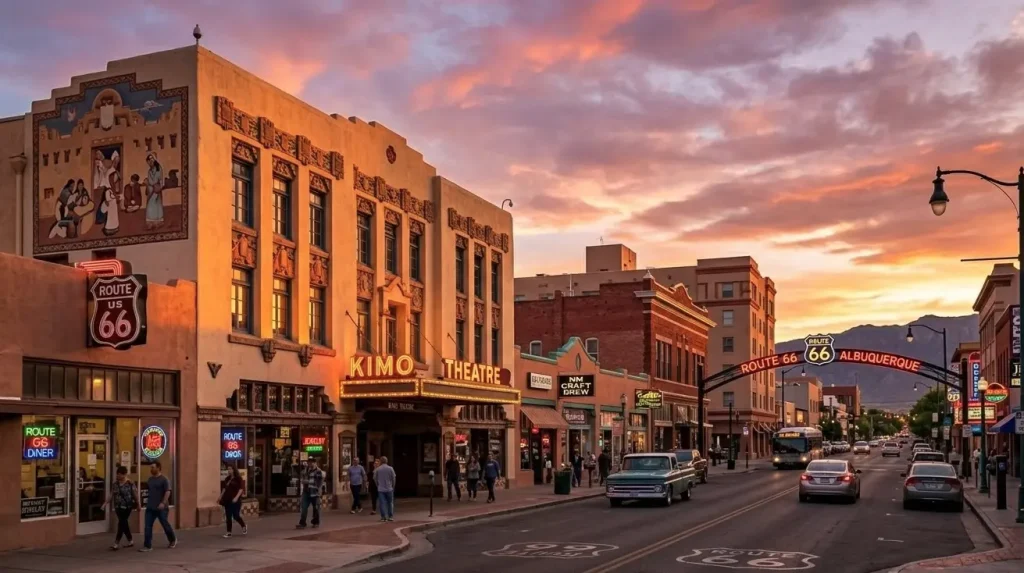
Downtown Albuquerque delivers an authentic urban lifestyle centered on Central Avenue and 4th Street. Residents enjoy walkable access to restaurants, galleries, entertainment venues, and transit — all within steps of their front door. With average rents around $1,300 per month, Downtown offers a compelling entry point into city living, attracting young professionals, artists, and anyone drawn to the energy of New Mexico’s largest city center. The neighborhood hums with activity from morning coffee runs to late-night performances, making every day feel connected to the pulse of Albuquerque.
What Makes Downtown Unique
Downtown Albuquerque carries a character unlike anywhere else in the city. Historic architecture stands shoulder-to-shoulder with contemporary murals and public art installations. The iconic KiMo Theatre — a 1927 Pueblo Deco masterpiece — anchors the cultural identity of the area and hosts everything from film screenings to live performances. Gold Avenue and Silver Avenue buzz with independent restaurants and bars that draw locals and visitors alike. The Albuquerque Convention Center and Civic Plaza serve as gathering points for community events throughout the year, while EDo (East Downtown) adds a creative, gallery-rich edge to the neighborhood’s eastern blocks.
Housing & Real Estate in Downtown
The Downtown housing market is defined by lofts in converted historic buildings, modern condos, and mixed-use developments where ground-floor retail sits below residential units. Downtown Albuquerque homes for sale typically average around $325,000, offering urban square footage at a competitive price point compared to similar markets nationwide. Renters will find a range of studio and one-bedroom loft apartments averaging $1,300 per month. The inventory is limited but moves with purpose — buyers and renters who act quickly on Downtown listings are often rewarded with unique spaces that simply don’t exist in suburban neighborhoods.
Things to Do in Downtown
Downtown Albuquerque is a concentrated hub of dining, arts, and nightlife. From craft cocktail bars and New Mexican cuisine on Gold Avenue to live music venues and comedy clubs scattered across the grid, there is always something happening. The Albuquerque Museum and the New Mexico Museum of Natural History and Science sit just on the neighborhood’s edge near Old Town, easily reachable on foot or by bike. Civic Plaza hosts seasonal farmers markets, concerts, and festivals. Whether it’s a weekend gallery hop through EDo or a weeknight dinner before a KiMo show, residents rarely run out of reasons to step outside.
Getting Around
Downtown is Albuquerque’s most transit-friendly neighborhood by a wide margin. The Albuquerque Rail Runner Express station connects residents to Santa Fe and other stops along the corridor with no car required. ABQ Ride bus routes converge throughout the area, and the ART (Albuquerque Rapid Transit) line runs directly along Central Avenue. Cyclists benefit from dedicated lanes and relatively flat terrain. For those who do drive, Interstate 25 and Interstate 40 interchange just south and east of Downtown, making regional travel straightforward. Many residents find a car optional for daily errands and commuting.
Schools & Families
Downtown Albuquerque falls within the Albuquerque Public Schools district. While the neighborhood skews toward young professionals and empty nesters given its urban density, families do call Downtown home. The area is within proximity to several APS elementary and middle schools, and charter school options are accessible via transit. The walkable environment and cultural richness — museums, public libraries, performance spaces — provide an enriching backdrop for children growing up in the city. Families considering Downtown typically weigh the vibrant lifestyle and convenience heavily against the trade-off of smaller living spaces and urban school options.