Real loft living — exposed brick, original timber beams, 14-foot ceilings, industrial windows — exists in Albuquerque, and it’s priced in a way that would seem impossible to anyone who’s shopped for the same product in Denver, Austin, or Los Angeles. ABQ’s historic building stock in the downtown corridor gives loft hunters genuine options. Here’s where to look and what to expect.
What Counts as a Real Loft in ABQ
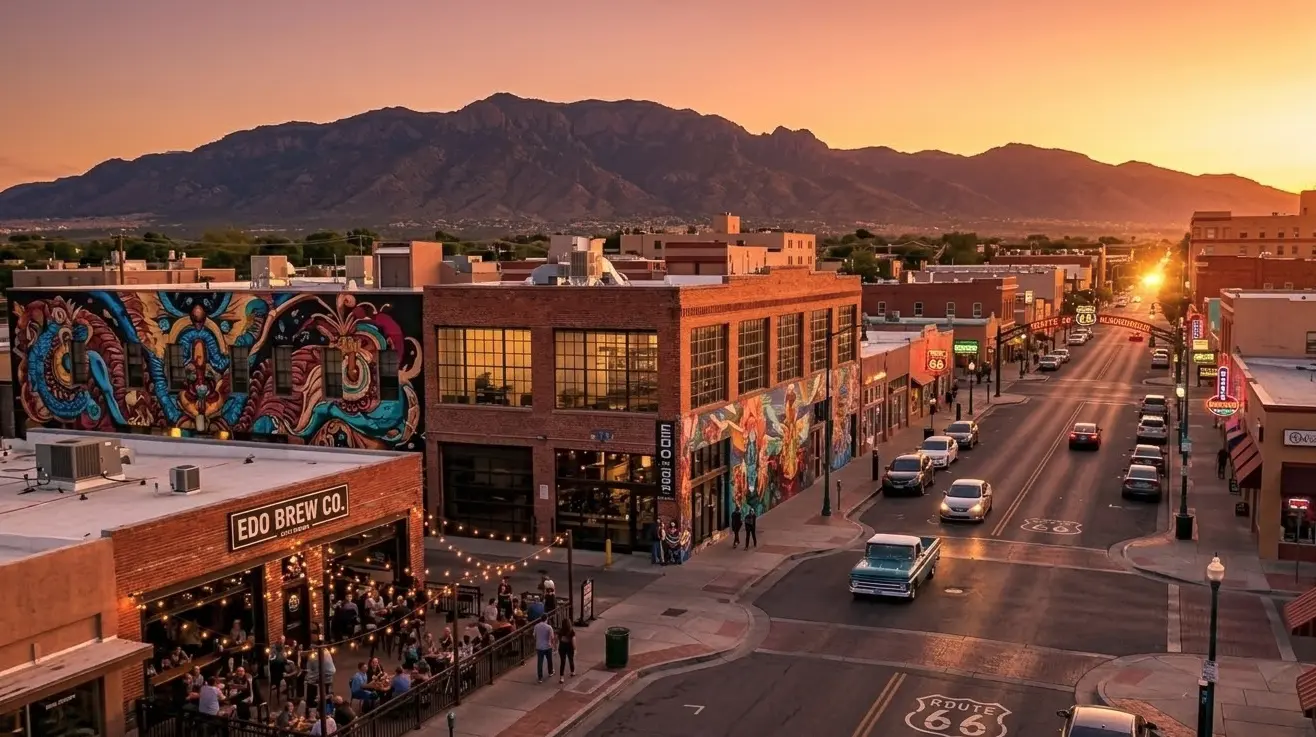
The term “loft” gets applied loosely in real estate marketing — any open floor plan with high ceilings sometimes gets the label. True lofts, as most buyers mean them, are conversions of commercial or industrial spaces: warehouses, factory buildings, historic commercial blocks. Albuquerque has a real stock of these, concentrated in the Downtown and EDo corridors, the Sawmill District, and in pockets along the Rail Trail.
The buildings that define ABQ’s loft market: early 20th century commercial buildings along Central Avenue and Gold Avenue, the warehouse district near 2nd Street and Coal, and several former industrial properties that have been sensitively converted since the early 2000s. These conversions preserved the architectural elements — the brick, the concrete, the heavy timber framing — that make them distinctive. They’re genuinely different from the “loft-style” new construction you see elsewhere.
EDo: The Epicenter of ABQ Loft Living
East Downtown (EDo) is where ABQ’s loft market is most concentrated. The neighborhood sits between Downtown proper and the Nob Hill corridor, with a mix of historic commercial buildings and newer infill development. The Rail Trail — a former railway right-of-way converted to a multi-use path — connects EDo to the Sawmill Market, Barelas, and the bosque beyond, giving loft residents trail access that most urban neighborhoods can’t claim.
Loft units in EDo typically run $160K-$320K depending on size, building, and finish level. The best units — larger footprints, better natural light, original architectural details preserved — command premiums that are still modest by national standards. Studios and one-bedrooms in older conversions are accessible to first-time buyers in a way that loft product rarely is in comparable cities.

The Sawmill District: Newer and Polished
The Sawmill District northwest of Downtown has newer loft-style construction that references industrial aesthetics without being literal historic conversions. The buildings here are cleaner, more uniform, and better-serviced than the older stock downtown — newer HVAC, updated electrical, better insulation. The Sawmill Market food hall anchors the neighborhood and draws daily foot traffic that makes the area feel genuinely activated.
Sawmill loft-style units run $250K-$450K — higher than older downtown stock, reflecting the newer construction and neighborhood polish. For buyers who want the loft aesthetic with newer infrastructure and more reliable building systems, Sawmill is worth the premium. For buyers who want maximum authenticity and can handle the older building quirks, EDo delivers more character per dollar.
Huning Highland and Barelas: Emerging Options
Huning Highland and Barelas south of Downtown have a few converted commercial properties that represent early-mover loft opportunities. These neighborhoods are earlier in the gentrification cycle than EDo — lower prices, more uncertainty, more upside. The National Hispanic Cultural Center anchors Barelas’ southern end and draws consistent cultural traffic. Loft buyers who bought in these neighborhoods three to five years ago have generally seen strong appreciation; those buying now are still getting in ahead of full market recognition.
What to Investigate Before Buying a Loft
Historic conversions have specific due diligence requirements beyond standard condo checks:
- Building systems age: When were the electrical, plumbing, and HVAC systems last updated? Older conversions sometimes have piecemeal upgrades — some systems new, others vintage. Know what you’re getting.
- Sound transmission: Concrete and brick buildings can have surprising sound characteristics — sometimes better than stud-frame construction, sometimes worse in specific frequency ranges. Visit at different times of day before buying.
- Natural light: Orientation matters enormously in lofts. A north-facing unit with no direct sunlight feels very different from a south-facing unit — especially in ABQ’s sunny climate where you’re either soaking it in or fighting it with blinds.
- HVAC system type: Some historic conversions have unconventional heating and cooling setups — in-unit PTAC units, mini-splits, or shared systems. Understand your utility exposure before closing.
- Historic tax credits: Some ABQ historic district properties have preservation covenants that affect exterior modifications and sometimes interior alterations. Know what’s restricted.
Renting vs. Buying Loft Space in ABQ
Loft rentals in ABQ’s urban core run $1,100-$1,800/month for a one-bedroom, $1,500-$2,200 for a two-bedroom in quality buildings. At those rent levels, the buy-vs-rent math for purchases in the $180K-$280K range tips toward buying if you’re planning to stay three or more years and can qualify for financing. The caveat: condo financing for historic conversions can be more complex, and some buildings won’t qualify for conventional loans. Have the lending conversation before you commit to a specific building.
Final Thoughts
Loft living in Albuquerque is genuinely accessible in a way that’s rare in comparable cities. The historic building stock is there, the prices are real, and the urban energy — while still developing — is genuine. The buyers who do best in this market are the ones who know which building they’re buying into, not just which neighborhood. Do the building-level due diligence, understand the HOA, check the financing eligibility, and make sure the lifestyle actually fits how you live. Sherlock Homes NM covers the EDo and Downtown neighborhoods where loft inventory concentrates — start there before you start touring units.