
Living in UNM / University
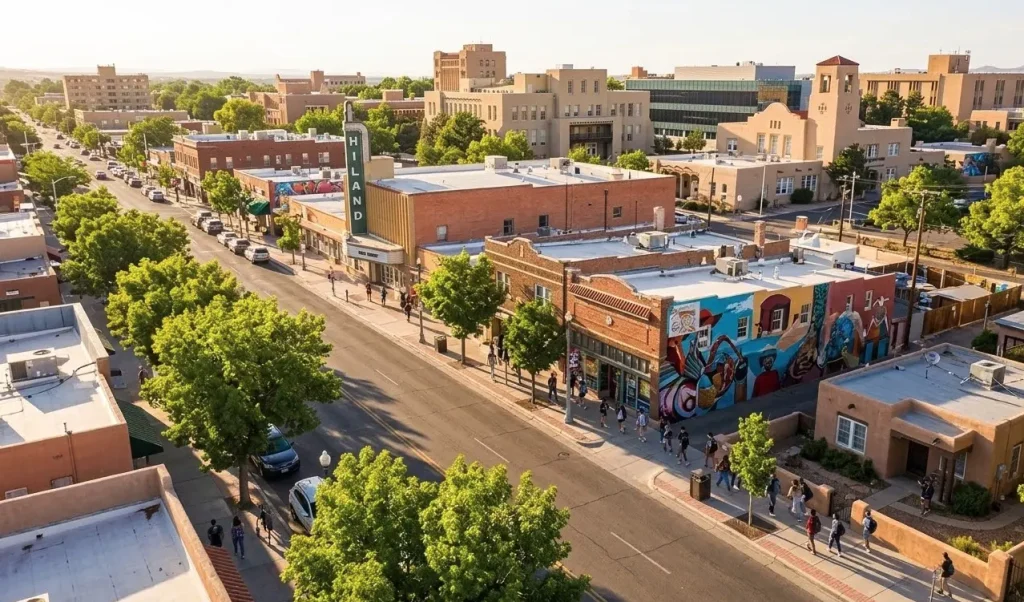
The UNM/University neighborhood pulses with the energy of one of New Mexico’s largest universities, yet it remains genuinely livable for everyone from graduate students to longtime Albuquerque residents. Centered along Central Avenue just east of downtown, the area offers average rents around $1,150 per month and average home prices near $335,000, making it one of the more accessible urban neighborhoods in the city. Tree-lined streets, historic bungalows, and a dense mix of shops and eateries within walking distance define everyday life here. Whether you’re commuting to campus or simply drawn to the neighborhood’s creative atmosphere, UNM/University delivers an authentic Albuquerque experience.
What Makes UNM / University Unique
Few neighborhoods in Albuquerque pack this much cultural weight into so few square miles. The University of New Mexico campus anchors the area with world-class venues including Popejoy Hall, the UNM Art Museum, and Zimmermann Library — all open to the public. Street art, independent bookstores, and a rotating cast of food trucks give the blocks around campus a creative, spontaneous character. The neighborhood sits at the crossroads of Nob Hill’s restaurant row to the east and Downtown’s arts district to the west, placing residents within easy reach of two of the city’s most dynamic corridors. The Albuquerque International Sunport is also just minutes south, a convenience that frequent travelers appreciate.
Housing & Real Estate in UNM / University
Housing in UNM/University skews toward rentals, with apartments and duplexes dominating the streets closest to campus. Farther from the university core, classic early-twentieth-century bungalows line quiet residential streets and attract buyers looking for character and value. Anyone searching for UNM Albuquerque homes for sale will find options that range from move-in-ready bungalows to fixer-uppers with genuine architectural charm. The average home price of approximately $335,000 remains below the citywide median for comparable urban properties, and the rental market — averaging around $1,150 per month — draws a steady pool of students and young professionals that can benefit landlords and investors alike.
Things to Do in UNM / University
The neighborhood’s social calendar never really empties. On any given weekend you can catch a performance at Popejoy Hall, browse rotating exhibitions at the UNM Art Museum, or join the weekend crowd spilling onto the patios along Central. Frontier Restaurant, an Albuquerque institution since 1971, is the neighborhood’s unofficial town square — open nearly around the clock and famous for its green chile and fresh tortillas. Tractor Brewing and a handful of craft coffee shops give locals plenty of low-key options, while Johnson Field and university recreational trails offer outdoor relief without leaving the area.
Getting Around
UNM/University is among Albuquerque’s most transit-friendly neighborhoods. ABQ Ride’s Rapid Ride Red Line runs along Central Avenue, connecting residents to Downtown, the Rail Runner commuter train station, and Nob Hill with frequent stops. The neighborhood is also well-suited to cycling, with dedicated lanes on several corridors and relatively flat terrain. Walkers will appreciate a Walk Score that outpaces nearly every other ABQ neighborhood outside of Downtown. For drivers, Interstate 25 is accessible within a few minutes, and the Sunport is a short trip south on Yale Boulevard.
Schools & Families
Families with school-age children have solid options in and around UNM/University. Jefferson Middle School and Albuquerque High School serve older students within the Albuquerque Public Schools district, and the proximity to UNM gives teenagers access to dual-credit college courses and extensive library resources. For younger children, several early-childhood programs operate near campus. The neighborhood’s density and walkability do require some intentionality around choosing quieter residential blocks for family living, but many long-term residents find that the cultural richness and convenience more than compensate — and property values here have shown steady appreciation over the past decade.