
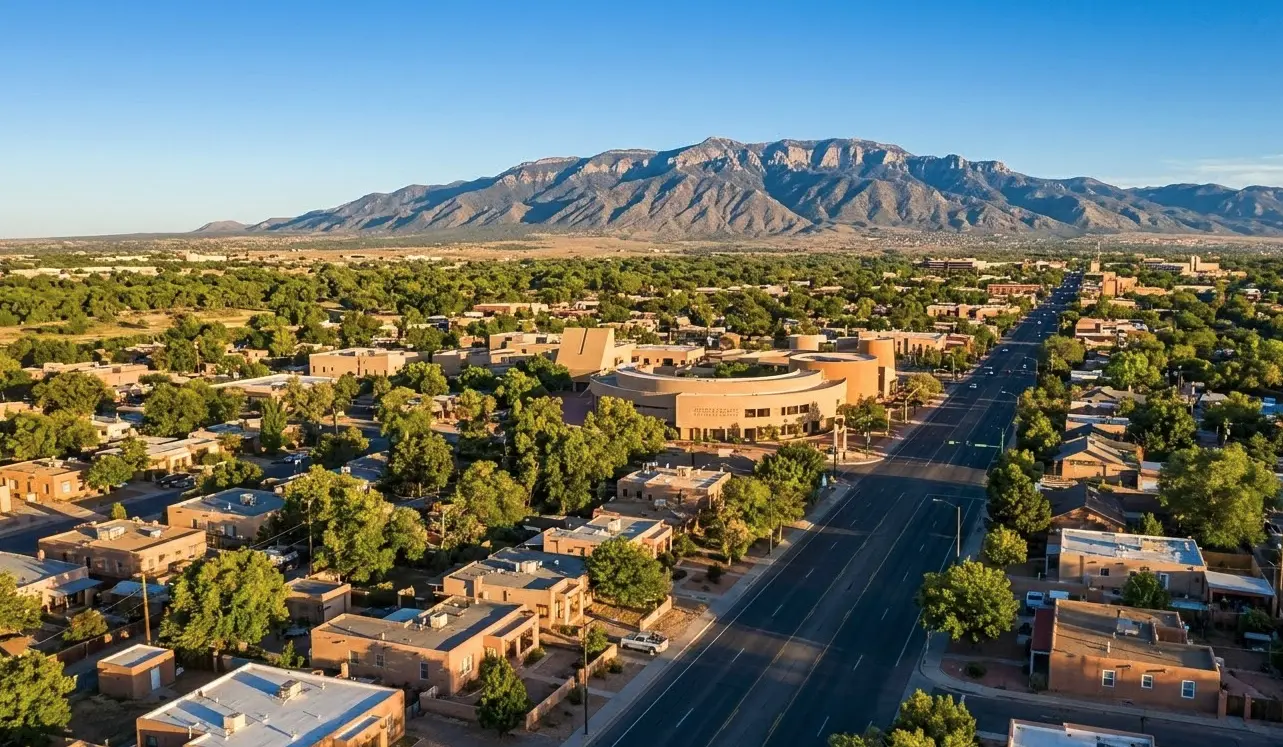
Texas has been one of the country’s fastest-growing states for over a decade, but the growth has brought consequences: Dallas home prices have surged, Austin has become one of the priciest tech markets in the country, and even Houston — long the most affordable major Texas city — has seen meaningful cost increases. Albuquerque has emerged as a compelling alternative for Texans seeking lower housing costs, a different landscape, and a Southwest culture that feels both familiar and genuinely distinct. Here’s everything you need to know about making the move from Texas to Albuquerque.
Why Texans Are Considering Albuquerque
The calculus differs by Texas city. Dallas transplants are often seeking escape from suburban sprawl, rising property taxes, and a cost of living that no longer feels manageable. Austin transplants — particularly those who arrived in the 2015–2020 wave and have now watched Austin prices eclipse California in some sectors — are running the numbers and finding Albuquerque compelling. Houston transplants often cite climate: ABQ’s dry desert air is dramatically different from Houston’s punishing heat-humidity combination, and the mountain scenery is a lifestyle upgrade that can’t be purchased in Texas.
Geography is also a factor. Albuquerque sits 600–700 miles from Dallas and Houston — close enough for regular drives back to visit family, far enough to feel like a genuine fresh start. El Paso is just 265 miles south, maintaining a Texas corridor connection for transplants with deep Texas ties.
Housing Cost Comparison
Texas home prices vary significantly by city, but the comparison with Albuquerque is consistently favorable:
- Dallas metro median (2026 est.): $420,000–$480,000 → ABQ saves $80,000–$145,000
- Austin metro median (2026 est.): $530,000–$600,000 → ABQ saves $170,000–$265,000
- Houston metro median (2026 est.): $320,000–$360,000 → roughly comparable, ABQ slightly lower
- San Antonio metro median (2026 est.): $290,000–$330,000 → comparable, ABQ slightly higher
The Austin comparison is the starkest — Austin’s rapid appreciation since 2019 has created significant savings opportunities for those willing to trade tech-hub access for desert mountain living. Dallas transplants save meaningfully and gain a dramatically different landscape. Houston transplants find comparable pricing but dramatically better climate and outdoor access.
The Tax Trade-Off: No State Income Tax vs. New Mexico
Texas has no state income tax — a significant advantage that New Mexico cannot match. New Mexico taxes income at rates from 1.7% to 5.9%. For a household earning $150,000/year, that’s potentially $5,000–$7,500 in state income taxes that Texas doesn’t impose. This is a real cost that Texas transplants to ABQ need to factor in.
However, Texas compensates for its no-income-tax status with some of the highest property tax rates in the nation. Effective property tax rates in Texas run 1.6–2.5% of assessed value — dramatically higher than New Mexico’s 0.7–0.9%. On a $450,000 Texas home, property taxes run $7,200–$11,250/year. On a $350,000 ABQ home, $2,450–$3,150/year. The property tax savings in ABQ can offset or exceed the income tax disadvantage for many households, especially at higher home price points.
Climate: From Texas Heat to Mountain Desert
For Texas transplants, the climate change is often the most immediately appreciated difference. Texas summers are brutal — Dallas hits 100°F+ for weeks at a time with significant humidity; Houston’s heat-humidity combination creates heat index values that make outdoor activity genuinely dangerous in July–August. San Antonio and Austin sit in between but still face significant summer heat and periodic drought.
Albuquerque’s summers are hot — 95–100°F in July and August — but the critical difference is the low humidity and the 5,300-foot elevation. ABQ’s heat is dry, and the afternoon monsoon storms that arrive in July bring genuine cooling. Evenings cool dramatically; sleeping with the window open is possible most of the summer. The mountain backdrop of the Sandias provides a psychological escape that flat Texas landscapes can’t offer.
Winters in ABQ are milder than the Dallas ice storm zone — ABQ rarely experiences the freezing rain and ice storms that have become notorious in North Texas. The 2021 Texas winter storm that devastated infrastructure is a distant memory in Albuquerque’s drier, more stable winter climate.
Neighborhoods for Texas Transplants
Texas buyers have broad housing preferences, but some patterns emerge:
From Dallas suburbs (Frisco, Plano, McKinney): Planned communities with HOAs, newer construction, good schools, and family-oriented neighborhoods map well to High Desert, Ventana Ranch, and the newer Rio Rancho developments. These deliver the suburban structure Dallas transplants expect at a lower price point.
From Austin: Austin transplants often prioritize lifestyle, walkability, and character. Nob Hill‘s walkable restaurant and arts corridor resonates with East Austin/South Congress refugees. The North Valley‘s semi-rural character appeals to buyers who loved Austin’s Hill Country fringe but couldn’t afford it anymore.
From Houston: Houston buyers often prioritize value and space. ABQ’s Academy Hills and established Northeast Heights neighborhoods offer generous lot sizes, quality schools, and prices that feel almost nostalgically affordable compared to Houston’s appreciated Inner Loop. The outdoor recreation access — hiking, skiing — is a genuine lifestyle upgrade for Houston transplants who had to drive hours to reach meaningful hills.
Culture and Lifestyle Adjustment
Texas and New Mexico share a Southwest heritage and a deep BBQ-vs-chile debate (both are correct). But the cultures are distinct. New Mexico’s dominant cultural influences are Hispanic (deep colonial roots) and Native American (Pueblo people have lived here for over a millennium). The food culture is its own thing — green chile is not Tex-Mex, and New Mexico will tell you so clearly. The political culture in Albuquerque leans more progressive than most Texas metros.
The pace is slower. The city is smaller (600,000 in ABQ metro vs. millions in Texas metros). Professional sports are absent at the major league level. The music scene, nightlife, and entertainment are smaller scale. These are real trade-offs that some Texas transplants feel acutely. The counterbalance: quality of life metrics around outdoor recreation, commute stress, and financial breathing room tend to improve significantly.
Practical Moving Notes
- Drive time: Dallas to ABQ is ~9 hours on I-20/I-40. Houston is ~12 hours. San Antonio is ~8 hours via I-10/I-25. These are driveable distances for moving trucks and personal vehicles.
- Moving costs: A full-service move from Dallas runs approximately $5,000–$10,000; from Houston, $7,000–$13,000, depending on volume and services.
- NM residency: Driver’s license and vehicle registration required within 90 days. Texas no-fault insurance requirements differ from NM — get NM-compliant insurance before registration.
- Texas vehicle registration cancellation: Cancel TX registration formally to document your departure date for any tax purposes.
Final Thoughts
Moving from Texas to Albuquerque involves a genuine trade-off on income taxes that California transplants don’t face — but the property tax savings, housing affordability, and dramatic climate and landscape improvement make the overall package compelling for many Texas households. Sherlock Homes NM has helped Texas transplants from Dallas, Austin, and Houston find the right neighborhood and home in Albuquerque. Reach out to start your investigation into where your Texas lifestyle maps best onto ABQ’s geography.