
Austin’s transformation from “the live music capital of the world” into one of America’s most expensive tech hubs has been staggering. Home prices that were $250,000 in 2015 are now $550,000+. Traffic that was bad has become intractable. The cultural Austin that people moved to in the early 2000s has been substantially priced out by the economic Austin that followed. Albuquerque sits 640 miles west and offers a surprisingly compelling alternative — not a compromise, but a genuine choice. Here’s the honest Austin vs. ABQ breakdown.
Housing: Austin’s 2026 Reality vs. ABQ
Austin’s housing correction from its 2022 peak has been partial — prices fell from their $600,000+ median high but stabilized in the $520,000–$590,000 range for the metro. Desirable Austin neighborhoods (Travis Heights, South Congress, Mueller, Tarrytown) remain well above $700,000–$900,000 for entry-level single-family. The tech-worker buyer profile that drove 2021–2022 has moderated but not disappeared.
Albuquerque’s metro median is $335,000–$360,000 — roughly $185,000–$230,000 less than Austin’s median. At the neighborhood-character level, Nob Hill in ABQ — walkable, arts-and-restaurant-focused, independent businesses on Central Ave — offers the South Congress / East Austin vibe at $280,000–$450,000 for single-family. The comparison isn’t perfect, but it’s real enough for lifestyle-seeking buyers who can’t justify another $250,000 for the Austin label.
Tech Jobs: Austin’s Clear Advantage
Austin has legitimately become a major tech hub. Apple, Tesla, Oracle, Dell, Google, Amazon, Meta, and dozens of high-growth startups have significant Austin presences. If your career requires in-person presence in a major tech ecosystem, Austin is the correct choice — Albuquerque doesn’t compete on this dimension.
Where Albuquerque competes: remote work. If you’re already working remotely for an Austin, Bay Area, or Seattle company, your income doesn’t require Austin proximity. In that scenario, keeping the Austin salary while living on ABQ costs is a financially transformative arbitrage. Sandia National Labs and Kirtland AFB provide a defense/tech employment anchor that matters for engineers and scientists in those sectors. The University of New Mexico and its research programs provide academic employment. The film and TV industry — New Mexico is a top production state — has created media and tech adjacent jobs.
Taxes: Texas No-Income-Tax vs. New Mexico
Texas’s no-income-tax status is a genuine Austin advantage for high earners. At $200,000 household income, the difference between Texas (0% state income tax) and New Mexico (effectively ~5% on income in that range) is roughly $8,000–$10,000/year. That’s real money that needs to be factored into the comparison.
The offset: Texas property taxes. Travis County effective rates run 1.8–2.2%. On an Austin home assessed at $550,000: $9,900–$12,100/year in property taxes. On a $350,000 ABQ home at NM’s 0.7–0.9% rate: $2,450–$3,150/year. The property tax savings of $7,000–$9,000/year substantially offsets NM’s income tax for most income levels. The combined state+property tax burden is often lower in ABQ than Austin for homeowners.
Traffic: Austin’s Defining Problem
Austin’s traffic has become a defining quality-of-life issue. I-35 through central Austin is consistently ranked among the most congested highway segments in the country. The city’s road infrastructure has failed to keep pace with population growth, and public transit alternatives remain limited. Average Austin commutes have grown to 30–50 minutes each way, with peak-hour delays regularly hitting 60–90 minutes on major corridors.
Albuquerque’s traffic is a fraction of Austin’s intensity. I-25 and I-40 experience real rush hours but nothing approaching Austin’s sustained congestion. Most ABQ workers commute 15–25 minutes. For remote workers, the commute comparison is moot — but the general traffic stress level of living in a city affects quality of life even for non-commuters.
Music, Culture, and Nightlife
Austin is legitimately one of the world’s great music cities — the 6th Street entertainment district, the Austin City Limits Music Festival, South by Southwest, and the sheer density of live music venues create a cultural offering that Albuquerque simply cannot replicate in scale. If live music is central to your lifestyle identity, this matters.
Albuquerque’s cultural scene is smaller but genuine. The Nob Hill bar and restaurant scene along Central Ave has authentic energy. The film and TV industry has brought creative professionals who’ve built a real arts community. The National Hispanic Cultural Center hosts world-class performances. The Balloon Fiesta is a global event. New Mexico’s distinct cultural identity — 400 years of Spanish colonial history, living Pueblo culture, a culinary tradition unique in the country — offers genuine cultural depth that takes time to appreciate but rewards engagement.
Outdoor Recreation: ABQ’s Decisive Win
Austin’s outdoor recreation is pleasant — Barton Springs, Barton Creek Greenbelt, Lake Travis, the Hill Country day trips. For a flat Texas city it’s excellent. But it doesn’t compare to what Albuquerque offers in mountain access.
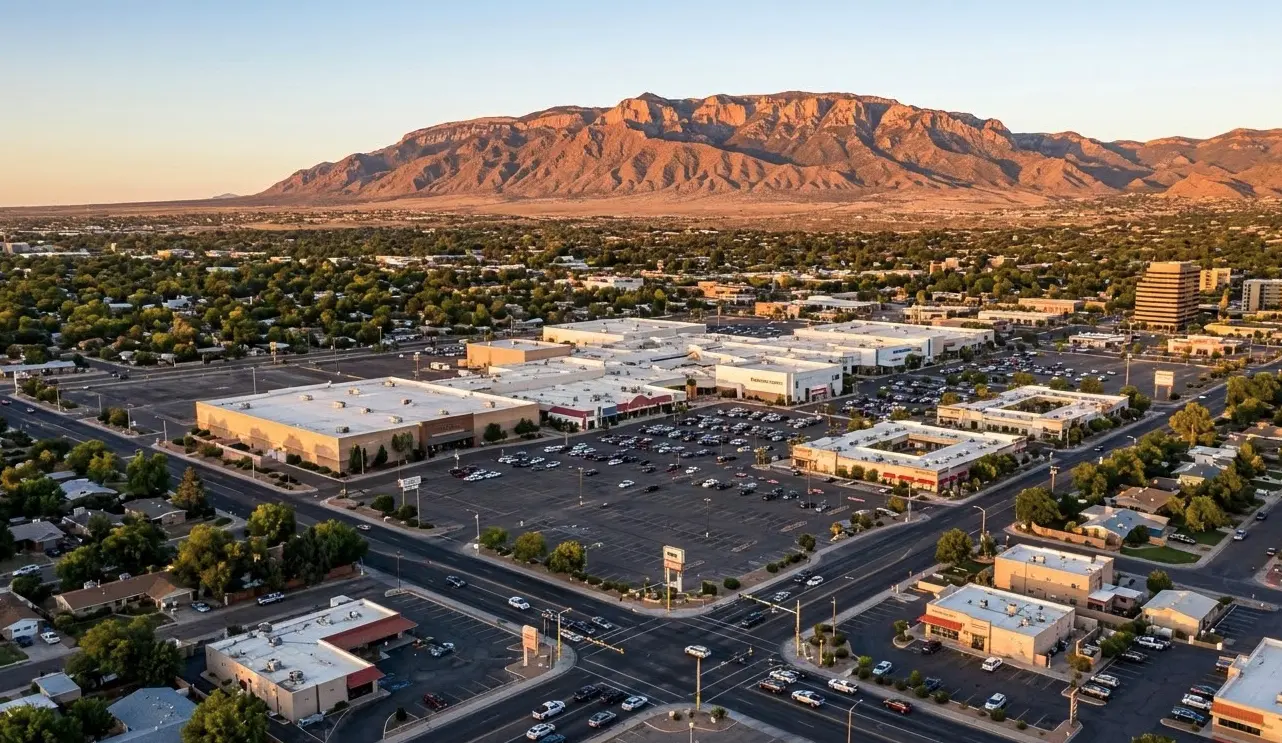
The Sandia Mountains rise 10,378 feet just east of ABQ — world-class hiking, mountain biking, and rock climbing literally minutes from the city. Ski Santa Fe and Taos Ski Valley are within 90 minutes. The Rio Grande bosque trail system runs the length of the city. North Valley and Corrales neighborhoods offer river valley access and trail systems from the doorstep. For active households who drove 3–4 hours to reach meaningful mountains from Austin, this is a transformative quality-of-life change.
Final Thoughts: Who Should Make the Move?
Austin beats ABQ for in-person tech careers, music and nightlife culture, and the cachet of a nationally recognized city. ABQ beats Austin for housing costs, property taxes, traffic, outdoor recreation, and financial sustainability for households whose income doesn’t scale with Austin’s cost increases. The Austin-to-ABQ move makes most sense for remote workers, retirees, and active households who realize they’ve been paying a premium for an Austin lifestyle they’re not fully using anymore. Sherlock Homes NM helps Austin transplants find their ABQ fit — the Nob Hill and High Desert areas tend to resonate most with buyers from Austin’s character neighborhoods. Reach out to start your investigation.