
Houston is one of America’s great cities — diverse, economically powerful, home to the energy industry, the Texas Medical Center, and one of the most genuinely cosmopolitan food cultures in the country. But it’s also flat, sprawling, subject to extreme heat-humidity combinations and recurring flood events, and built at a scale that makes getting anywhere feel like a logistical operation. Albuquerque offers a dramatically different character: mountains, dry air, a smaller scale, and a quality of life that Houston residents who visit often find immediately appealing. Here’s what you need to know about the Houston-to-ABQ relocation.
Housing Cost: A Closer Comparison Than You’d Think
Houston is often cited as one of America’s most affordable major cities, and that reputation has some truth — the Houston metro median home price runs $320,000–$360,000, which is quite close to Albuquerque’s $335,000–$360,000 median. On raw housing price, Houston and ABQ are roughly comparable, making this a different relocation story than the California or Austin exodus.
The key difference shifts to property taxes. Houston-area (Harris County) effective property tax rates run 1.8–2.5% of assessed value — among the highest in the country. On a $340,000 Houston home, that’s $6,120–$8,500/year in property taxes annually. On a comparable $340,000 ABQ home, it’s $2,380–$3,060/year. The annual property tax savings of $3,000–$5,500 is meaningful and compounds significantly over time — over 10 years, that’s $30,000–$55,000 in savings, even before accounting for property value appreciation differences.
Additionally, Houston’s flood risk creates insurance costs that Albuquerque doesn’t carry. Many Houston homeowners pay $2,000–$5,000+/year in flood insurance premiums depending on their flood zone. ABQ’s desert location makes flood insurance essentially irrelevant for most properties (with the exception of some arroyo-adjacent areas during extreme monsoon events). That insurance savings alone can offset NM’s income tax difference for many households.
Climate: The Most Dramatic Difference
For most Houston transplants, the climate change is the most immediately and profoundly felt difference. Houston’s summer climate — sustained 95–100°F temperatures combined with 70–90% relative humidity — creates heat index values that regularly exceed 110°F, making outdoor activity genuinely dangerous and uncomfortable for months at a time. June through September in Houston is survival mode for anyone who spends time outside. The psychological toll of Houston’s summers is something most residents acknowledge but often don’t fully appreciate until they experience something different.
Albuquerque’s summers are hot — 95–100°F in July and August — but the critical variable is humidity. ABQ’s desert air means the same 98°F temperature feels dramatically more tolerable than Houston’s humidity-laden version. Mornings and evenings cool into the 60s–70s almost every day. The July–September monsoon season brings afternoon thunderstorms that cool the city, fill the Rio Grande, and make the desert bloom. Outdoor activity is possible and enjoyable in Albuquerque’s summers in ways that Houston’s simply don’t allow.
Flooding is another climate factor. Houston’s flood vulnerability — Hurricane Harvey in 2017, the Memorial Day and Tax Day floods, recurring bayou overflow events — has become a persistent quality-of-life and financial concern for Houston homeowners. ABQ has arroyo flooding risk during extreme monsoon events but nothing approaching Houston’s repeated catastrophic flooding. The psychological relief of not worrying about flood damage is real for Houston transplants.
Neighborhoods Houston Transplants Tend to Choose
Houston has a diverse neighborhood landscape — from the walkable Montrose and Midtown to suburban The Woodlands and Sugar Land. ABQ has parallels for most:
From Houston’s Inner Loop (Montrose, Heights, Midtown): Nob Hill on ABQ’s Central Avenue corridor has the walkable, eclectic, restaurant-dense character that Houston’s inner loop neighborhoods offer. Smaller scale, but genuine neighborhood energy.
From Houston’s Energy Corridor or suburban west side: ABQ’s Westside communities — Ventana Ranch, Taylor Ranch — offer planned community structure and newer construction at comparable or lower price points than Houston’s established western suburbs.
From The Woodlands or Katy-style master-planned communities: High Desert in ABQ’s Northeast Heights foothills is the closest ABQ equivalent — master-planned, HOA-governed, trail-connected, and situated against dramatic mountain terrain that The Woodlands’ forest setting actually evokes, just with mountains instead of pines.
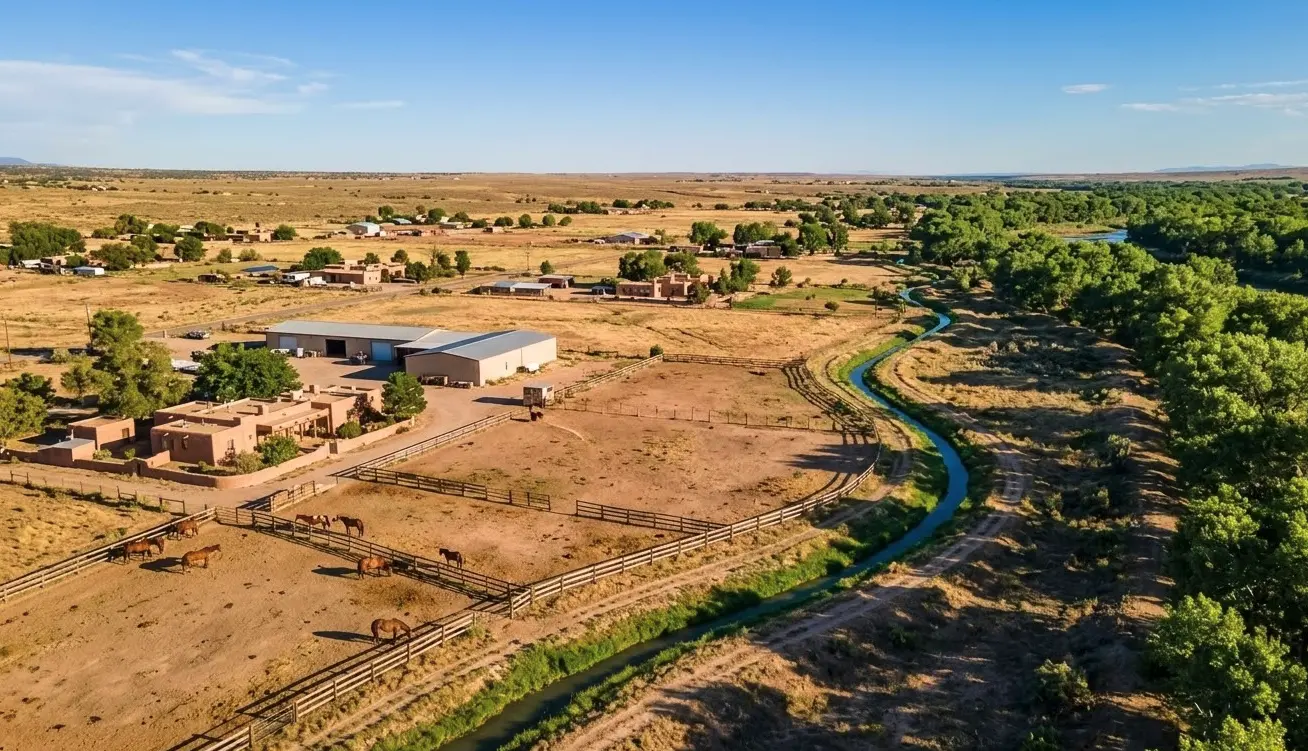
From Houston’s semi-rural fringe: North Valley and Corrales offer acreage, mature trees, and semi-rural character at price points that Houston’s rural fringe communities would recognize. The cottonwoods and bosque along the Rio Grande are genuinely beautiful in a way that Houston’s flat suburban fringe can’t match.
Jobs: Houston’s Larger Economy vs. ABQ’s Anchors
Houston’s economy — anchored by energy, the Texas Medical Center (the world’s largest medical complex), petrochemicals, and shipping — is far larger and more diverse than Albuquerque’s. For in-person careers in energy, medicine, or finance, Houston has no peer in the Southwest.
ABQ’s employment anchors are different in character: Kirtland Air Force Base, Sandia National Labs, the University of New Mexico Medical Center, Presbyterian and Lovelace healthcare systems, and Intel’s Rio Rancho facility. Healthcare professionals relocating from the Texas Medical Center will find a smaller but functional medical job market. Defense and aerospace engineers find genuine opportunities at Kirtland and Sandia. Remote workers — the dominant profile for Houston-to-ABQ movers — find ABQ’s lower cost structure transformative when maintaining Houston-range salaries.
Practical Relocation Notes
- Distance: Houston to ABQ is approximately 760 miles — about 11 hours on I-10 west through San Antonio to I-25 north, or I-10 through El Paso to I-25 north. Both routes are well-traveled interstates.
- Moving costs: Full-service from Houston to ABQ typically runs $7,000–$13,000 for a 3-bedroom household.
- NM residency: Driver’s license and vehicle registration required within 90 days. NM charges a 4% motor vehicle excise tax at first registration — factor this in for newer vehicles.
- Altitude adjustment: At 5,300 feet, ABQ is significantly higher than sea-level Houston. Expect mild breathlessness during exercise for the first few weeks. Drink more water than Houston trained you to — desert air dehydrates faster.
Final Thoughts
The Houston-to-Albuquerque relocation isn’t primarily driven by housing cost savings (the prices are comparable) — it’s driven by property tax relief, flood risk elimination, climate quality, outdoor recreation access, and the desire for a smaller, more navigable city with dramatic mountain scenery. For Houston residents who’ve weathered one too many flood scares or one too many months of oppressive summer heat, ABQ offers a genuine quality-of-life reset. Sherlock Homes NM is well-versed in what Houston buyers are looking for and which Albuquerque neighborhoods deliver it. Reach out to start your search.